If you want room to breathe without giving up access to Chicago, the Barrington area has a rare kind of appeal. You may be looking for a private estate, a property with space for horses, or simply a home that feels more open and grounded than a typical suburban neighborhood. Around Barrington, you can find that balance of land, lifestyle, and convenience, and understanding the local differences can help you make a smarter move. Let’s dive in.
Why Barrington Stands Out
Barrington has long held a distinct place in the Chicago area housing market. The Village of Barrington describes itself as the anchor of a 90-square-mile area made up of seven independent villages, located about 40 miles northwest of Chicago with a Metra Union Pacific-Northwest Line station in the village center.
That combination matters if you want more space without feeling disconnected. You have a traditional village center, rail access, local services, and an established community identity, but you also have nearby areas where homes sit on much larger parcels with a more rural feel.
The area’s history helps explain why estate and equestrian living still resonate here. Barrington’s local history notes that the community became a countryside retreat for wealthy Chicago businessmen in the early 1900s, and that equestrian traditions and open space remain part of the area’s identity today.
Estate Living Around Barrington
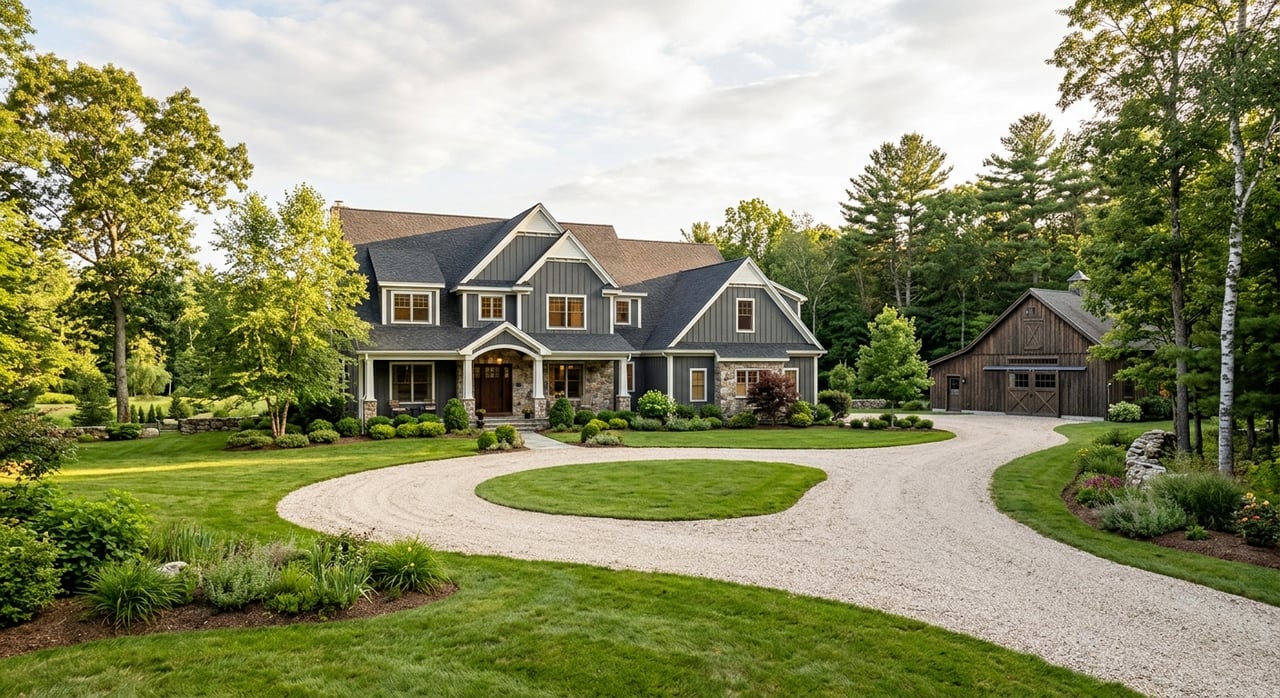
When buyers talk about estate living around Barrington, they are usually talking about more than square footage. They are looking for privacy, longer driveways, wider setbacks, mature landscapes, and land that supports a different day-to-day experience.
In nearby Barrington Hills, that lifestyle is especially visible. The village describes itself as a 29-square-mile community of rolling hills, winding roads, and large properties, and it notes that the majority of parcels are 5 acres or larger.
That size changes what a home can offer. Instead of a conventional suburban lot, you may find room for gardens, outbuildings, paddocks, barns, or hobby uses that need more land and flexibility.
What “Estate-Style” Often Means Here
In practical terms, estate-style properties in the Barrington area often include:
- Larger parcels, often well beyond a standard subdivision lot
- More separation from neighboring homes
- Longer setbacks and more privacy
- Space for barns, stables, paddocks, and gardens
- Greater flexibility for outdoor hobbies and land use
Barrington Hills specifically describes property sizes ranging from 1 to 10+ acres. It also highlights the ability to pursue activities such as raising animals, growing gardens, and keeping horses on private property.
Equestrian Living in Barrington Hills
For many buyers, the Barrington area is not just about land. It is about a horse-friendly setting where equestrian use is part of the local landscape rather than an afterthought.
Barrington Hills is the clearest example. The village explicitly highlights backyard barns and stables, along with the ability to house, raise, ride, and breed horses on private property.
That distinction is important if you are comparing Barrington-area homes to homes in more conventional suburban communities. In many places, horse use would be highly limited or unrealistic. In Barrington Hills, it is part of the established identity and land-use pattern.
What Buyers Should Ask About Horse Property
If you are considering an equestrian property, look beyond the home itself. The right fit depends on how the land functions and whether the property is already set up for the way you plan to use it.
Key questions to ask include:
- Is the parcel size appropriate for your intended use?
- Are there existing barns, stables, paddocks, or fenced areas?
- What condition are the fences and gates in?
- Is there space for equipment access?
- How is drainage handled in riding or turnout areas?
- Is there a plan or setup for manure management?
- Does the property connect to public trails, private trails, or membership-based access?
These details can have a major impact on cost, upkeep, and convenience after closing.
Trails and Open Space Shape the Lifestyle
One reason estate and equestrian living around Barrington feels so established is the broader outdoor network. The appeal is not limited to one subdivision or a handful of large lots. It is reinforced by preserves, riding routes, and open land throughout the region.
Barrington Hills says the community includes more than 150 miles of private and public trails across 3,800 acres of forest preserve. The Barrington Hills Park District also operates the Riding Center on Bateman Road beside Spring Lake Preserve, which adds to the area’s equestrian infrastructure.
The Village of Barrington also points to nearby open-space destinations such as Crabtree Nature Preserve, Deer Grove Preserve, Spring Creek Preserve, Cuba Marsh, and Grassy Lake Preserve. Lake County Forest Preserves adds another layer, noting that more than 82 miles of its trails are open to horseback riding.
Public vs. Private Trail Access
This is one of the most important details for buyers to understand. Not every trail in the area works the same way.
The Riding Club of Barrington Hills maintains bridle paths through cooperation with landowners and the Forest Preserve District of Cook County. Barrington Hills notes that trails outside the forest preserve are reserved for members and guests, which means access can vary depending on location and membership.
If trail access is high on your priority list, confirm exactly what comes with a property. A home may be in an equestrian area without offering the same kind of direct or automatic trail use you might assume.
Daily Ownership Looks Different Here
A large property can be rewarding, but it usually asks more of you than a standard suburban lot. That is especially true in Barrington Hills, where land management plays a bigger role in daily ownership.
The village states that it does not provide water or sewer service, and that most homes use private wells and septic systems. It also recommends annual water testing and notes that septic tanks generally require periodic pumping.
Waste and recycling work differently as well. Barrington Hills says residents contract privately for waste and recycling services, including yard waste and manure removal.
Upkeep Items to Plan For
Compared with a typical suburban home, ownership costs and responsibilities may be higher because you may need to manage:
- Private well monitoring and water testing
- Septic system maintenance and pumping
- Fence repair and replacement
- Gate access for trailers or equipment
- Drainage and runoff control
- Pasture, paddock, or dry lot upkeep
- Manure handling and removal
For horse properties, proper land management is especially important. Research cited in the report notes that horses can contribute to erosion and water pollution if wet areas and runoff are not managed well.
How to Decide if This Lifestyle Fits You
Estate and equestrian living around Barrington can be a great fit, but it is not only about the dream. It is also about matching your expectations to the realities of ownership.
You may be a strong fit for this market if you value privacy, want more land, enjoy outdoor living, or need space for horses or hobby uses. You may also appreciate having a village center and rail access nearby while still living in a more open setting.
On the other hand, if you want a low-maintenance property with public utilities and minimal outdoor upkeep, some parts of the estate market may feel more demanding than expected. The right move often comes down to how much land you want to manage and how you plan to use it.
What Smart Buyers Do Before They Buy
Before you move forward on an estate or equestrian property, take time to evaluate both lifestyle and infrastructure. A beautiful setting matters, but so do the practical details that support long-term ownership.
A smart review should include:
- Parcel size and layout
- Existing equestrian improvements, if any
- Fencing, gates, and access points
- Well and septic condition
- Drainage and wet areas
- Waste and manure service plans
- Trail access type and limitations
- Overall maintenance demands of the land
This kind of due diligence can help you avoid surprises and compare properties more clearly. It also helps you distinguish between a home that simply has acreage and one that truly supports the lifestyle you want.
Why Local Guidance Matters
The Barrington area has a layered identity that can be hard to understand from listing photos alone. One property may offer estate privacy near village conveniences, while another may lean more fully into equestrian use, trail access, and land management.
That is why local guidance matters. When you understand how parcel size, utilities, access, and upkeep vary from one property to the next, you can make a decision that fits both your goals and your comfort level.
If you are considering a move to the Barrington area and want help evaluating estate homes, equestrian properties, or relocation options, Anne Hardy can help you move forward with clarity and confidence.
FAQs
What is estate living around Barrington?
- Estate living around Barrington usually refers to homes with larger parcels, more privacy, wider setbacks, and room for features such as gardens, barns, stables, paddocks, and other outbuildings.
What is typical lot size in Barrington Hills?
- Barrington Hills says the majority of parcels are 5 acres or larger, with properties ranging from 1 to 10+ acres.
Can you keep horses on property in Barrington Hills?
- Yes. Barrington Hills specifically highlights backyard barns and stables and notes that horses can be housed, raised, ridden, and bred on private property.
Are there horseback riding trails near Barrington?
- Yes. Barrington Hills cites more than 150 miles of private and public trails, and Lake County Forest Preserves says more than 82 miles of its trails are open to horseback riding.
What should buyers know about Barrington Hills utilities?
- Barrington Hills says it does not provide water or sewer service, so most homes use private wells and septic systems.
Is upkeep higher on an estate or equestrian property?
- Usually yes. Buyers should plan for more active property management, which may include well and septic upkeep, fencing, drainage, manure handling, and general land maintenance.