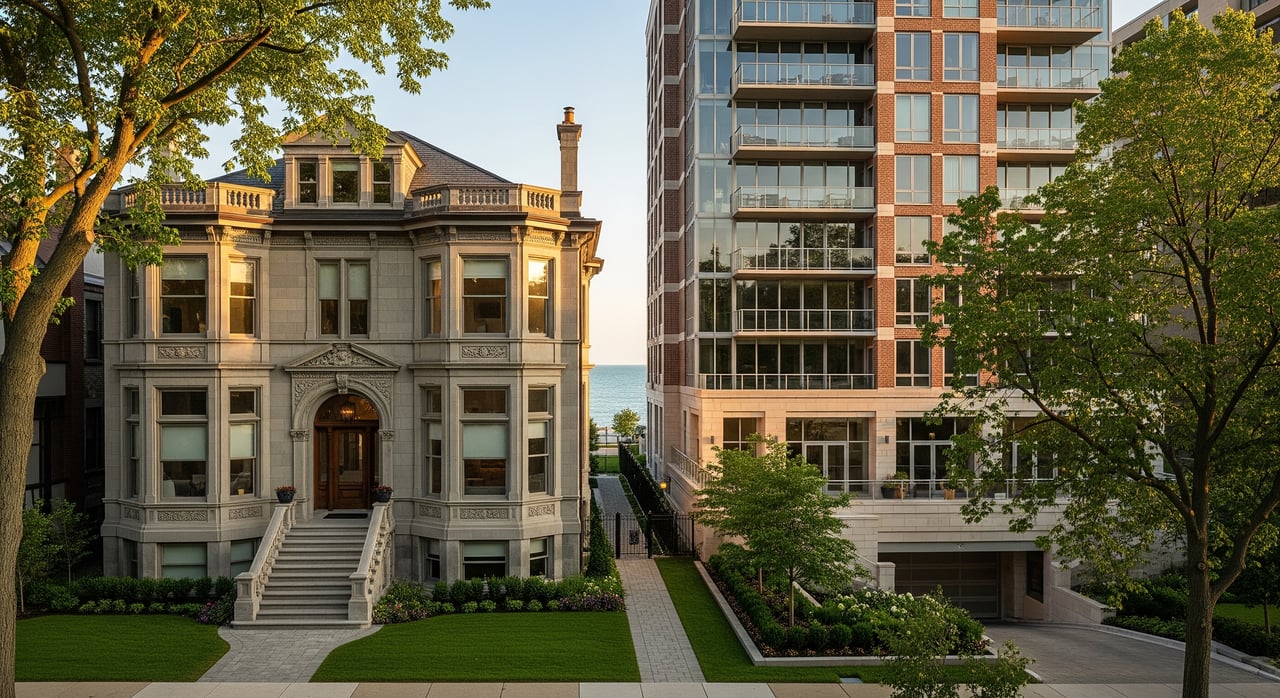
Torn between a low‑maintenance condo and a classic Evanston house? You are not alone. When you compare HOA dues, repairs, and how fast each type tends to resell, the choice can feel overwhelming. In this guide, you will learn how costs stack up, what you are responsible for, what affects resale timelines, and how different Evanston neighborhoods fit each option. Let’s dive in.
Condo vs. single‑family at a glance
- Condos usually have a lower entry price and lower personal maintenance, with monthly HOA dues that cover building costs and reserves.
- Single‑family homes typically cost more to buy and maintain but offer more space, private yards, and greater control over your property.
- In Evanston, proximity to CTA Purple Line, Metra, downtown corridors, parks, and the lakefront shapes demand and resale speed for both types.
What drives costs in Evanston
You will see several cost categories for both condos and single‑family homes: purchase price, mortgage, property taxes, insurance, utilities, and maintenance. Condos often list lower than single‑family homes in the same area because of smaller size and no land component. Your mortgage rate and terms depend on the loan program, down payment, and, for condos, lender project approvals.
Cook County property taxes are based on assessed value and exemptions you may qualify for. Insurance also differs. Condo owners carry an HO6 policy for interior finishes and personal property, while the building’s master policy covers the exterior. Single‑family owners carry HO3 or HO5, which includes the structure and other structures on the lot. Utilities vary by property; some condo dues include water or heating.
For maintenance, condo owners pay for interior items, while associations handle the exterior and common elements. Single‑family owners are responsible for everything inside and out. Condos have HOA dues and can have special assessments for capital projects if reserves are not sufficient.
Estimate your monthly cost
A simple way to estimate carrying cost is: monthly mortgage principal and interest, plus one‑twelfth of annual property taxes, plus one‑twelfth of annual home insurance, plus HOA dues if a condo, plus typical utilities, plus a maintenance reserve.
Collect these variables for accuracy:
- Sales price, down payment, and current interest rate from your lender
- Annual tax bill from Cook County records
- HOA dues, what they cover, and the master policy details (for condos)
- Typical utility bills
- A monthly maintenance reserve
HOA fees explained
HOA dues vary by building and the services provided. Review the association budget, reserve study, and cash reserves to gauge financial health. See what dues cover, such as exterior insurance, water, heat, snow removal, landscaping, elevators, and amenities. Ask about recent assessments and planned capital projects, like roof or facade work.
Maintenance and risk
Condo responsibilities and risks
As a condo owner, you typically handle interior systems and finishes in your unit. The HOA handles common elements, exterior, snow removal, and grounds. Primary risks include insufficient reserves, deferred building maintenance, potential special assessments, litigation involving the association, and coverage gaps or high deductibles in the master policy. Your due diligence should include the budget, reserve study, 12–24 months of meeting minutes, insurance certificate, declaration and bylaws, rental and pet rules, and any pending litigation.
Single‑family responsibilities and risks
With a single‑family home, you cover roof, siding, foundation, mechanicals, landscaping, snow removal, and all interior systems. Risks include unexpected system failures and major capital expenses. Budget for seasonal upkeep and adjust by the property’s age, lot size, and condition. A common approach is to set aside about 1 to 2 percent of the purchase price annually for maintenance, scaled to the home’s age and recent updates.
Insurance differences
HO6 policies usually cover your interior finishes, personal property, personal liability, and loss of use. The master policy covers the building shell and common areas; confirm whether it is “all‑in” or “bare walls,” and understand how deductibles are handled. HO3 or HO5 for single‑family homes covers the structure, other structures, personal property, and liability, with options for higher replacement cost coverage.
Resale realities in Evanston
Location is the top driver of resale value and speed. Walkable access to the CTA Purple Line, Metra, and downtown corridors like Davis, Church, and Main supports demand for both condos and houses. Updated kitchens and baths, newer mechanicals, curb appeal, and accurate pricing relative to comparable properties also matter.
Condos are influenced by building‑level variables. Owner‑occupancy rates, rental caps, management quality, reserves, dues level, parking, and pet policies affect both buyer interest and financing eligibility. Some lenders apply project‑level criteria that can impact the buyer pool.
Single‑family homes lean on lot size, exterior condition, school district boundaries, and functional space like additions or finished basements. Landscaping and curb appeal carry more weight than in most condos. Land value can also shape appreciation.
When market conditions shift, days on market and negotiation power change by property type. In strong markets, well‑priced condos near transit can sell quickly. In softer markets, condos can sit longer due to a narrower buyer pool or financing constraints.
When a condo may be harder to resell
- Low owner‑occupancy, weak reserves, or pending litigation
- Higher HOA dues than comparable buildings
- Limited or no parking in a parking‑scarce area
When a single‑family may be harder to resell
- Deferred structural issues or significant needed work
- Small lot size or location on a busy corridor
- Unpermitted or non‑conforming improvements
Neighborhood and lifestyle fit
Walkable downtown and transit
Downtown Evanston and the Davis Street corridor offer a high concentration of condos with easy access to CTA and Metra, plus dining and retail. This setup fits buyers who prioritize commute ease, amenities, and a lower maintenance lifestyle.
Near Northwestern University
Areas near campus feature a mix of condos and single‑family homes. The university boosts rental demand and can create more seasonal turnover. If you are considering renting out a unit later, check rental rules and any caps.
Residential districts and lakefront
Historic districts and tree‑lined streets in north and south Evanston tend to favor single‑family homes with yards and more privacy. Lakefront pockets often carry premiums for both houses and condos with views. Parking convenience, outdoor space, and the look and feel of the block influence daily living and long‑term value.
Which option fits your goals
- You want low maintenance and transit convenience: prioritize a condo near Davis or Main Street corridors.
- You want space, privacy, and a yard: focus on single‑family homes in residential neighborhoods.
- You might rent in the future: consider a condo where rental policies allow flexibility and confirm owner‑occupancy and cap rules.
Ask yourself:
- How much time and budget do you want to devote to maintenance each year?
- Do you need parking, private outdoor space, or building amenities?
- What commute and neighborhood environment fit your routine?
- How important is resale speed versus purchase price today?
Due diligence checklists
For condo buyers
- HOA budget, reserve study, and current cash reserves
- 12–24 months of meeting minutes and special assessment history
- Declaration, bylaws, rules, rental and pet policies
- Master insurance certificate, coverage scope, and deductible responsibility
- Pending litigation and any building violations
- Owner‑occupancy and renter percentages
- Parking assignment, storage, and management quality
- Recent capital projects and planned assessments; verify if FHA/VA approval matters to your financing
For single‑family buyers
- Full inspection of structure, roof, HVAC, plumbing, electrical, and sewer
- Radon test and any specialty inspections as needed
- Utility and maintenance histories, if available
- Property survey, lot lines, and easements
- Zoning and permit history for additions or finished spaces
- Check for municipal special assessments that may apply
For sellers preparing to list
- Address deferred maintenance and improve curb appeal or staging
- For condos, line up official HOA documents and estoppel letters early
- Consider a pre‑listing inspection to price and prioritize repairs
- Present clear, organized documentation to reduce buyer friction
Next steps
Choosing between a condo and a single‑family home in Evanston comes down to how you want to live, what you are comfortable maintaining, and how you weigh monthly costs against future resale. A customized cost and resale analysis for specific buildings or blocks can clarify your best move. If you are selling, targeted preparation and pricing can shorten days on market and protect your net.
If you want a local, hands‑on advisor who pairs concierge‑level service with powerful brokerage resources, connect with Anne Hardy for a personalized strategy and neighborhood‑level guidance.
FAQs
What is the main cost difference between an Evanston condo and a house?
- Condos typically have lower purchase prices and HOA dues instead of full exterior maintenance, while houses have higher purchase and maintenance costs but no HOA dues.
How do HOA fees affect resale value in Evanston condos?
- Reasonable dues with strong reserves and clear coverage can support value, while unusually high dues or weak reserves may narrow the buyer pool and slow resale.
Are condos near Northwestern University hard to finance?
- Financing depends on building factors like owner‑occupancy, rental caps, reserves, and any litigation; buildings that fail lender criteria can limit eligible buyers.
What should I budget for single‑family maintenance in Evanston?
- A common guideline is 1 to 2 percent of the purchase price per year, adjusted for age, condition, and recent updates of the home.
Do condos or houses sell faster in Evanston?
- It varies with market conditions; proximity to transit and accurate pricing can help both, but condos may take longer in softer markets due to financing and buyer pool limits.
Which has higher property taxes in Cook County: condo or single‑family?
- Taxes hinge on assessed value and exemptions for the specific property, so compare individual tax bills rather than assuming by property type.